
If you find yourself tossing and turning at 2 AM, your mind racing through tomorrow’s to-do list while your body feels completely exhausted, you are definitely not alone. Millions of people struggle to wind down at night, leading to an endless cycle of fatigue and frustration.
Recently, there has been a massive shift in how people are handling their nighttime routines. Instead of reaching for groggy over-the-counter sleep aids, the wellness community has turned to a simple, two-ingredient topical mineral. Creating a DIY magnesium oil spray for sleep has become one of the most effective, natural ways to calm a racing mind, soothe restless legs, and drift into a deep, restorative slumber.
Let’s break down exactly why this homemade mineral spray works, how to make it for a fraction of the retail price, and the correct way to apply it so you can finally get the rest you deserve.
Table of Contents
1. Why the Wellness World is Obsessed with Topical Magnesium
If you spend any time on TikTok or Pinterest wellness boards, you have likely noticed the massive shift away from traditional sleeping pills and synthetic melatonin gummies. Women across the US are becoming much more mindful about what they put into their bodies, seeking out holistic alternatives that support the nervous system naturally.
This is exactly why topical magnesium is having such a huge moment. Magnesium is widely known as the “ultimate relaxation mineral.” Because modern diets are often depleted of this essential nutrient due to over-farmed soils, many of us are walking around with a magnesium deficiency. By applying it topically rather than taking a pill, it bypasses the digestive system and absorbs directly into the skin, offering fast-acting relief for nighttime anxiety and physical tension.
2. The Science: How Magnesium Oil Actually Combats Sleeplessness
It is easy to dismiss wellness trends as internet hype, but the science behind magnesium is rock solid. It plays a crucial role in over 300 biochemical reactions in the human body, and its impact on your sleep cycle is profound.
Activating GABA (The Calming Brain Chemical)
When your mind is racing at night, your brain is struggling to slow down its electrical activity. Magnesium naturally binds to and stimulates GABA (gamma-aminobutyric acid) receptors in the brain. GABA is an inhibitory neurotransmitter, which is a fancy way of saying it acts like a brake pedal for your nervous system. By supporting GABA production, magnesium helps slow down racing thoughts and reduces the nighttime anxiety that keeps you awake.
Melatonin Production
You might already be familiar with melatonin, the hormone that dictates your sleep-wake cycle. What most people do not realize is that your body struggles to produce its own natural melatonin efficiently without sufficient magnesium. Magnesium is a required cofactor in the biological process that converts serotonin into melatonin. Supporting your magnesium levels means supporting your body’s innate ability to know when it is time to sleep.
Stopping Restless Leg Syndrome (RLS) & Cramps
If you have ever been kept awake by twitching calves or an uncontrollable urge to move your legs, you know how frustrating Restless Leg Syndrome can be. Magnesium acts as a natural calcium blocker. While calcium causes muscle fibers to contract, magnesium allows them to relax. Applying it directly to your legs can help ease the twitching and cramping that disrupt a peaceful night.
3. Store-Bought vs. DIY Magnesium Spray: Why Making It Is Better
You can easily find aesthetic bottles of magnesium spray at high-end health food stores and online wellness boutiques. However, making it yourself is significantly better for a few key reasons.
First is the cost breakdown. Store-bought sprays are often extremely overpriced, sometimes costing upwards of $20 to $30 for a small 4-ounce bottle. When you buy the raw ingredients, you can make an entire year’s supply for about the same price.
Secondly, by making it at home, you avoid the synthetic preservatives and sneaky hidden fragrances often added to commercial products to extend their shelf life. Finally, making your own DIY magnesium oil spray for sleep gives you total control over the concentration level, allowing you to easily dilute the formula if you happen to have highly sensitive skin.
4. How to Make the Best DIY Magnesium Oil Spray for Sleep (Recipe)
Making this spray at home takes less than five minutes. It is called an “oil” because of how it feels on the skin, but it actually contains no carrier oils at all—it is simply highly saturated mineral water.
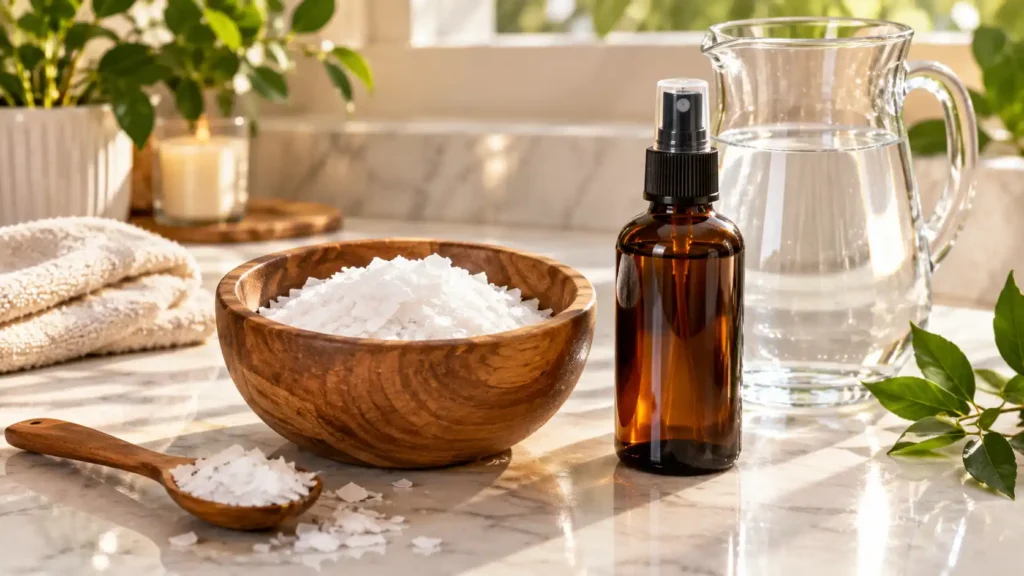
The 2 Crucial Ingredients
- Magnesium Chloride Flakes: You MUST use pure magnesium chloride flakes. According to dermatological studies on topical magnesium absorption, magnesium chloride absorbs into the human cellular structure much more efficiently than standard sulfate.
- Distilled Water: Always use pure distilled water. Tap water contains chlorine and trace minerals that can interfere with the mixture, and distilled water ensures no bacteria will grow in your bottle.
The Exact Ratio and Brewing Process
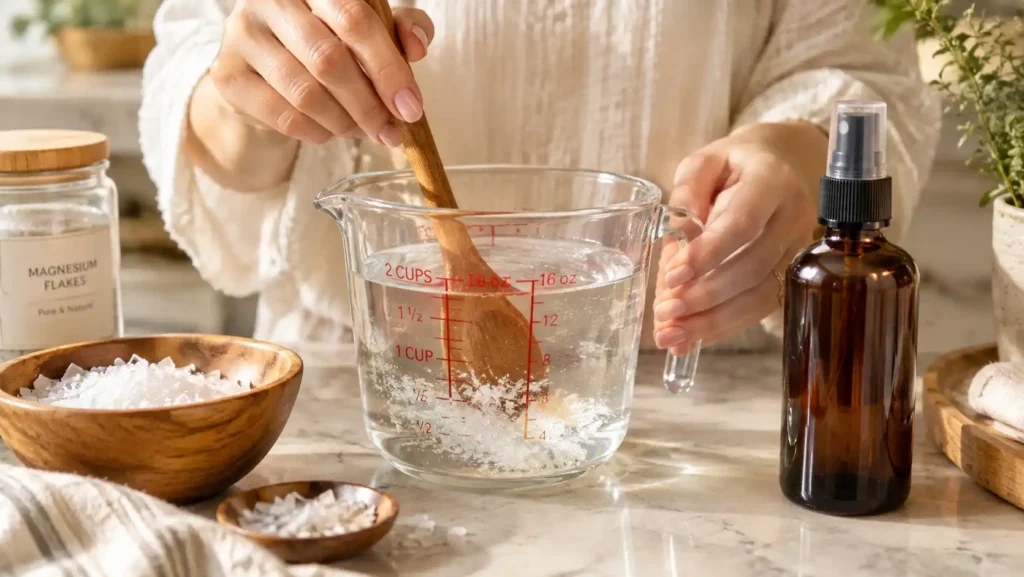
- Measure out 1/2 cup of distilled water and heat it in a pan or microwave until it is warm, but not boiling. Boiling water can alter the mineral properties of the flakes.
- Add 1/2 cup of magnesium chloride flakes into a glass measuring cup or heat-safe bowl.
- Pour the warm distilled water over the flakes.
- Stir continuously with a wooden or silicone spoon until the flakes are completely dissolved and the liquid turns clear.
- Let the mixture cool completely to room temperature before pouring it into a dark glass spray bottle.
Optional: The “Deep Sleep” Boost
For an extra layer of relaxation, you can add aromatherapy to your spray. Once the mixture is completely cool, add 5 to 10 drops of therapeutic-grade Lavender or Roman Chamomile essential oil. Shake the bottle gently before every use to disperse the oils.
5. The Correct Way to Apply Magnesium Spray for Maximum Absorption
If you just spray this anywhere on your body without a plan, you might find it uncomfortable. Application technique is everything when it comes to topical minerals.
The “Bottom of the Feet” Trick
The absolute best place to spray magnesium oil is on the soles of your feet. The skin on the bottom of your feet is tough and thick, making it much less likely to experience the infamous “magnesium itch.” Furthermore, the pores on your feet are large, allowing for rapid bloodstream absorption. Simply spray the bottoms of your feet, rub it in briefly, and put on a pair of cozy cotton socks before getting into bed.

Targeting Heavy Shoulders & Restless Legs
If you hold tension in specific areas, you can use the spray for targeted relief. Spray it directly onto tense calves, tight hamstrings, or heavy neck and shoulder muscles. Spend two minutes massaging the liquid deep into the muscle tissue to help manually release the physical tension.
Why Does Magnesium Oil Tingle or Itch? (And How to Fix It)
This is the most common question for first-time users. When you apply magnesium oil, you might feel a noticeable tingling, itching, or slight stinging sensation. This is completely normal. In the wellness community, this “magnesium tingle” is generally considered a sign that your cellular magnesium levels are low.
As your body’s levels restore over a few weeks of consistent use, the tingling usually fades. If it bothers you, simply dilute your spray with a little more distilled water, or leave the spray on your skin for 20 minutes (which is how long it takes to fully absorb) and then gently wipe it off with a damp washcloth.
6. Realistic Results: What to Expect on Night 1 vs. Day 30
Switching to a natural mineral routine provides both immediate and long-term benefits.
- Night 1: You will likely notice immediate physical relaxation. About twenty minutes after application, you may feel heavier eyelids, a decrease in muscle tension, and a general sense of calm. Many people report entering a deeper REM sleep cycle and having more vivid dreams on their first night.
- Day 30: By the end of your first month, your cellular magnesium levels should be well-restored. You can expect less daytime anxiety, a more regulated sleep-wake cycle without waking up in the middle of the night, and a brighter, more refreshed morning “glow” simply because your body is finally getting proper, uninterrupted rest.
7. Bonus: The Ultimate “Inner Glow” Nighttime Ritual
True wellness connects how you feel on the inside with how you look on the outside. You can easily turn your new sleep hack into a comprehensive, relaxing evening ritual.
Here is how to build the ultimate beauty-sleep combo: After you wash your face for the night, put on a relaxing ASMR or soundscape video, sit on the edge of your bed, and spray the magnesium oil onto the soles of your feet. While you let the mineral absorb for 20 minutes, take that time to care for your skin. Mist your face with a hydrating DIY rice water toner to flood your pores with amino acids. Then, lock in that moisture by gently pressing a nourishing castor oil and frankincense serum into your skin. By the time your skincare is done, your magnesium has absorbed, and you are perfectly prepped for deep sleep.
8. Frequently Asked Questions (FAQ)
Can I use Epsom salts instead of magnesium chloride flakes?
While Epsom salts (magnesium sulfate) are fantastic for a warm muscle-soaking bath, they are not ideal for a leave-on body spray. Magnesium chloride absorbs much more efficiently through the skin and leaves behind far less of a sticky, drying residue compared to sulfate.
Is it safe to use this DIY magnesium oil spray for sleep every single night?
Yes, for the vast majority of people, using topical magnesium daily is incredibly safe and highly recommended to keep your mineral levels balanced. Your body will generally only absorb what it needs through the skin.
Will it stain my bedsheets or clothes?
No, the mixture is simply distilled water and mineral salts, so it does not contain any true oils that would leave a grease stain. However, it can leave a slight white, salty residue if you spray too much. Just let it dry for a few minutes before getting under your expensive sheets.
Can I use this on my kids to help them sleep?
Topical magnesium can be very helpful for growing children (especially for “growing pains” in their legs), but a child’s skin is far more sensitive than an adult’s. You must heavily dilute the mixture—try a ratio of 1 part magnesium flakes to 3 parts distilled water—and always do a patch test first. As always, consult your pediatrician before starting a new wellness routine for your children.
9. Final Thoughts: Sleep Better, Glow Brighter
You do not have to settle for staring at the ceiling every night or relying on supplements that leave you feeling groggy the next morning. By trusting natural minerals and giving your body the nutrients it is actually craving, you can completely transform your evening routine.
Mixing up a bottle of DIY magnesium oil spray for sleep is affordable, incredibly easy, and highly effective. Keep a bottle on your nightstand, make the simple act of massaging your feet a nightly ritual, and watch as your sleep anxiety fades away—leaving you to wake up rested, recharged, and glowing.
3 thoughts on “The Viral DIY Magnesium Oil Spray for Sleep (Natural Insomnia Remedy)”