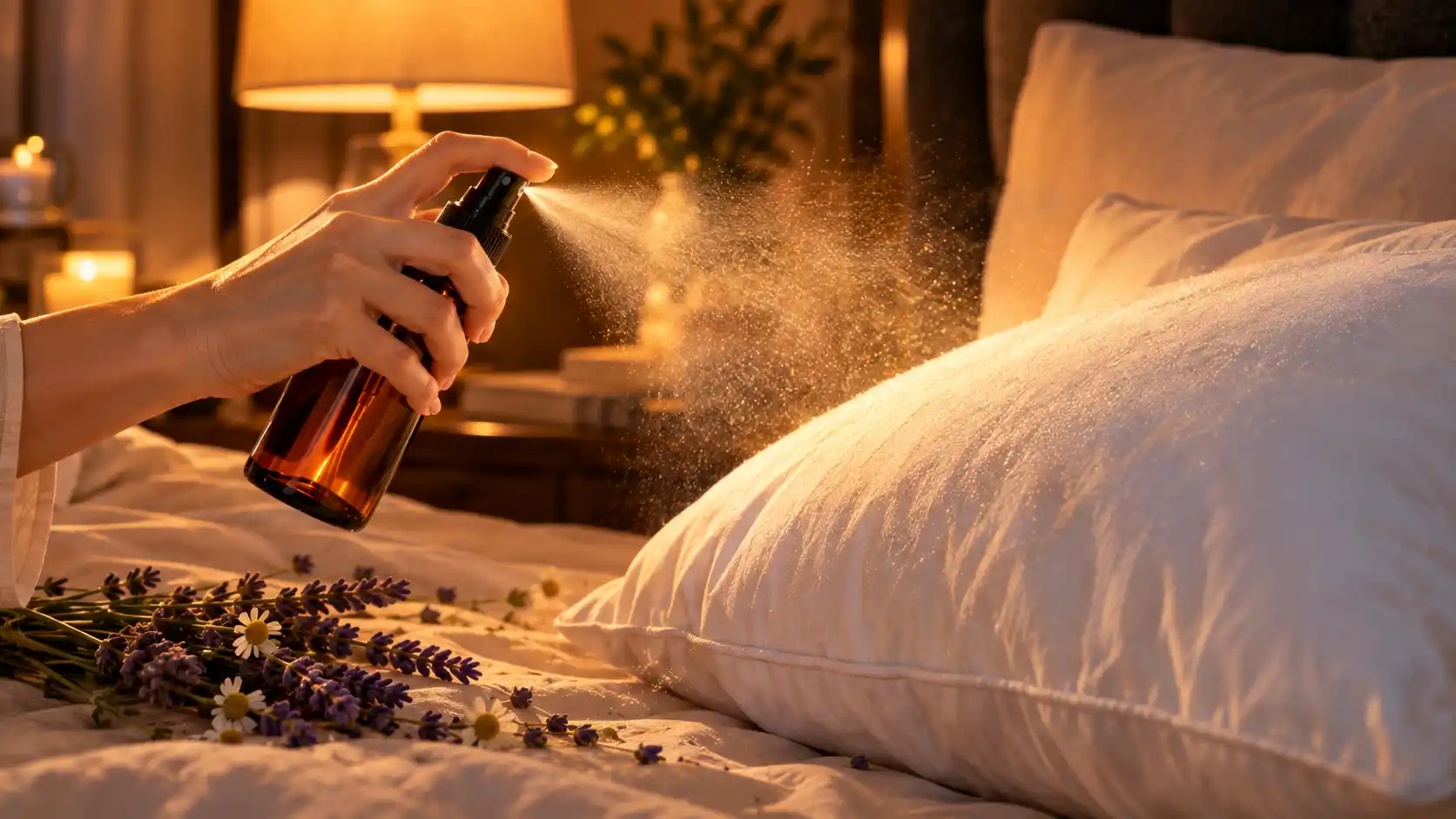
We have all experienced those frustrating nights where you feel completely exhausted, yet the moment your head hits the pillow, your brain decides it is time to replay every awkward moment from the past ten years. If you are struggling to wind down and disconnect from the stress of the day, transforming your bedroom environment is one of the most effective ways to signal to your body that it is time to rest.
Creating a beautiful, calming atmosphere does not require an expensive spa trip. In fact, one of the easiest and most luxurious upgrades you can make to your nighttime routine is brewing a homemade DIY lavender and chamomile pillow mist. This simple, three-ingredient sleep spray not only makes your bed smell incredible but also uses actual plant science to lower your heart rate, reduce anxiety, and help you drift off faster.
Let’s dive into exactly why this specific floral combination is so powerful, the hidden toxins in store-bought sprays, and the secret trick to making a homemade mist that will not ruin your expensive silk pillowcases.
Table of Contents
Why You Need a Bedtime Aromatherapy Ritual
If you have ever caught a whiff of a specific perfume and immediately thought of an old friend, you already know how powerfully scent is tied to memory and emotion. The olfactory nerve has a direct line to the amygdala—the part of the brain that processes emotions and triggers the fight-or-flight response.
By introducing a specific, calming scent exclusively at bedtime, you create a psychological trigger. Over time, scent trains your brain to associate your bed strictly with sleep rather than stress, work, or doom-scrolling on your phone. This is exactly why the popular Pinterest aesthetic of a “cozy nighttime vibe” is actually backed by nervous system science. When your environment feels intentional and smells relaxing, your body naturally begins to drop its guard.
The Science of Sleep: Why Lavender and Chamomile Actually Work
While there are dozens of essential oils out there, this specific duo is the gold standard for insomnia and nighttime restlessness. They do not just smell nice; they actively change your body’s physiological state.
Lavender: The Natural Nervous System Relaxant
Lavender is arguably the most heavily researched botanical when it comes to sleep. The active compound in lavender, called linalool, has been shown to have a profound effect on the nervous system. Breathing in linalool lowers your heart rate, reduces blood pressure, and slows down your breathing within minutes of inhalation. It essentially acts as a gentle, natural sedative, helping your body transition from an alert state to a relaxed one.
Chamomile: The Anxiety-Reducing Floral Extract
If lavender is for the body, chamomile is for the mind. Roman chamomile is an incredibly soothing floral extract that has been used for centuries to calm racing, anxious thoughts. It contains an antioxidant called apigenin, which binds to specific receptors in your brain that may decrease anxiety and initiate sleep. Together, these two oils create a powerhouse blend that addresses both physical tension and mental stress before bed.
Store-Bought vs. Homemade Pillow Sprays: The Hidden Toxins
You can easily walk into any big-box store and buy a lavender-scented sleep spray for ten dollars, but you might want to read the ingredient label first.
You should never spray synthetic commercial fragrances on your pillow—the exact place where you will be burying your face and breathing deeply for the next eight hours. Many mass-market “calming” sprays contain synthetic fragrances and chemical binders that are known endocrine disruptors. Instead of helping you heal and rest, these fake fragrances can cause morning headaches, sinus irritation, and skin breakouts.
By making a DIY lavender and chamomile pillow mist at home, you are using the pure, healing benefits of real essential oils. Plus, the cost savings are massive. A premium, all-natural sleep spray can easily cost upwards of $25 at a boutique wellness shop. When you buy the raw ingredients yourself, you can brew bottle after bottle for just pennies a piece.
How to Make Your DIY Lavender and Chamomile Pillow Mist (Recipe)
Making your own sleep spray is incredibly easy and takes less than five minutes. The key is using the right ratio of ingredients so the scent is perfectly balanced—neither too weak nor overwhelmingly strong.
What You Will Need (Ingredients & Supplies)
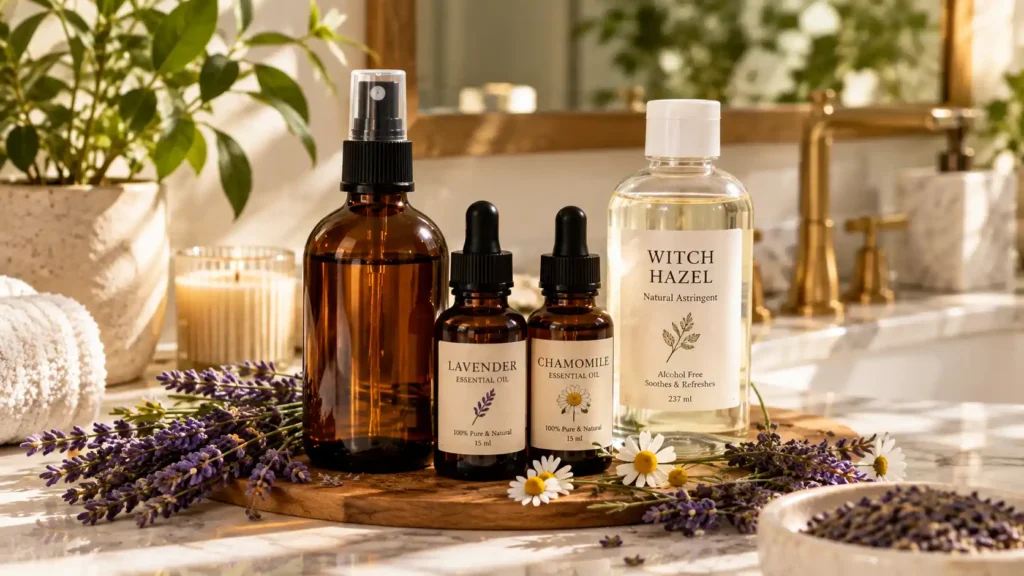
- Pure Distilled Water: Always use distilled water, not tap water, to ensure your spray stays fresh and bacteria-free.
- Lavender Essential Oil: Ensure it is 100% pure, therapeutic-grade lavender oil.
- Roman Chamomile Essential Oil: Look for high-quality chamomile to get those genuine anxiety-reducing benefits.
- The Secret Binder: You will need either pure, unscented Witch Hazel or high-proof, unflavored Vodka.
- A Dark Glass Spray Bottle: A 2-ounce or 4-ounce amber or cobalt blue glass bottle with a fine mist sprayer.
Why You Need a Binder
If you simply mix essential oils and water, they will naturally separate. If you spray that unmixed combination onto your bed, you will end up spraying pure droplets of oil that can leave stubborn grease spots on your expensive pillows and sheets. The witch hazel or vodka acts as an emulsifier (or binder). It helps the essential oils disperse evenly throughout the water, creating a light, even mist that evaporates beautifully without staining your linens.
The Step-by-Step Mixing Process
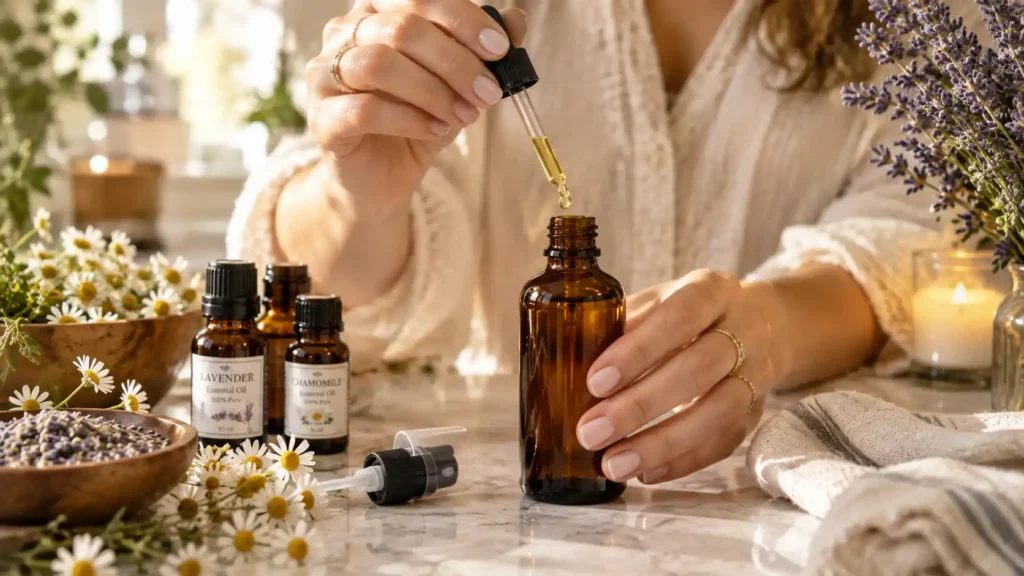
- Add the Binder: Pour 1 tablespoon of witch hazel (or vodka) directly into your empty glass spray bottle.
- Add the Essential Oils: Carefully drop in 15 drops of lavender essential oil and 10 drops of chamomile essential oil. Swirl the bottle gently to allow the oils to mix with the binder.
- Fill with Water: Top off the rest of the bottle with your distilled water.
- Protect the Oils: Always store your mist in a dark glass bottle. UV light breaks down the therapeutic properties of essential oils very quickly, and dark glass preserves their potency.
- Shake Before Use: Give the bottle a gentle shake before every single use to ensure everything is perfectly distributed.
How to Use Your Sleep Spray for Maximum Relaxation
To get the absolute most out of your new nighttime ritual, application timing matters.
The “Pillow & Sheet” Misting Technique
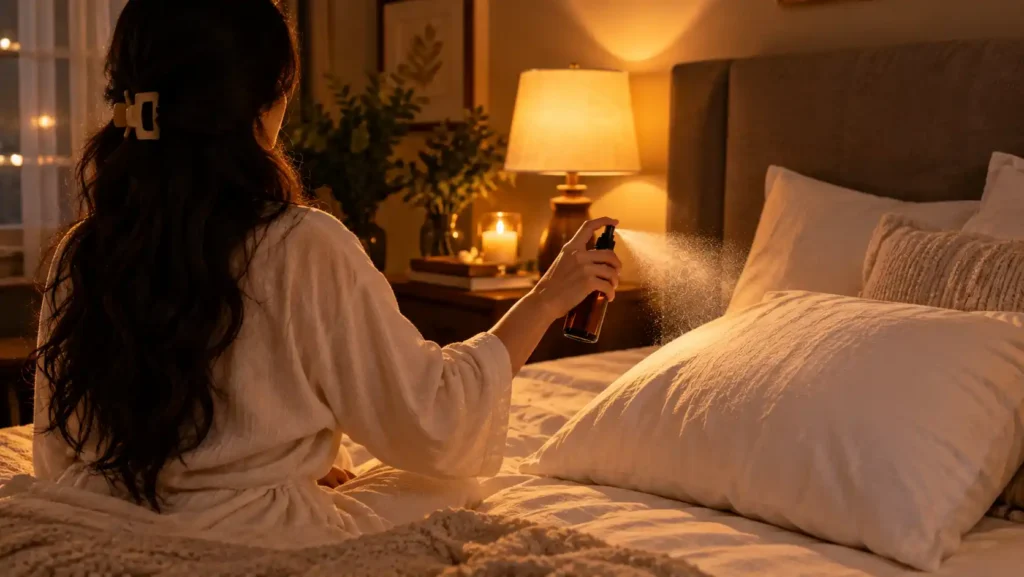
Do not spray your bed immediately before your head hits the pillow, as the fabric might still feel slightly damp. Instead, try misting your pillows and the top edge of your blanket about 10 minutes before you get into bed. This gives the liquid just enough time to evaporate, leaving behind only the pure, soft, relaxing scent of the oils by the time you pull the covers back.
Using It as a Room or Shower Steam Spray
You do not have to limit this to your bedding. If you take warm showers at night, try spritzing the mist into the air (away from your face and the direct stream of water) right before you step in. The steam will catch the essential oils, creating a deeply relaxing, spa-like environment that helps loosen tight muscles before you even dry off.
The Perfect “Inner Glow” Nighttime Routine
The secret to a truly restorative evening is stacking a few simple, intentional habits together. You can easily build the ultimate relaxing nighttime routine by combining a few of our favorite wellness rituals.
Start by prepping your environment: mist your pillows and sheets with your new aromatherapy spray so it has time to settle. Next, take care of your physical tension by applying a natural DIY magnesium oil spray for sleep directly to the soles of your feet to stop restless legs and calm your nervous system. Finally, while the magnesium absorbs and the room smells like a lavender field, lock in your nighttime skincare by gently pressing a nourishing castor oil and frankincense serum for wrinkles into your face and neck.
By the time you are finished, your skin is glowing, your muscles are relaxed, and your bed is an absolute sanctuary.
Important Safety Tips for Essential Oils
While natural ingredients are wonderful, they are also highly concentrated. It is important to handle essential oils with a bit of care.
Pet Safety Warning
This is a crucial point that many people overlook: cats and dogs process essential oils very differently than humans do, and some oils can be highly toxic to their livers. While a light mist of lavender is generally considered safe around most dogs, you should never spray essential oils directly onto your pets or their bedding. Always keep your bedroom door open so your pets can easily leave the room if the scent becomes too overwhelming for their sensitive noses. When in doubt, always consult your veterinarian.
Skin Contact
Remember that this recipe is designed specifically as a linen and room spray. Because of the witch hazel/vodka binder and the concentration of the oils, it is not intended to be used as a direct facial mist or a body perfume.
Frequently Asked Questions (FAQ)
Will this essential oil spray stain my white pillows or silk pillowcases?
As long as you use the witch hazel or vodka binder and remember to shake the bottle well before every use, the spray should not leave grease stains. However, if you are using incredibly delicate or expensive silk pillowcases, it is always a good idea to do a quick patch test on a hidden corner first.
Can I use tap water instead of distilled water?
No, you really should avoid tap water. Tap water contains trace minerals and natural impurities that can encourage bacteria and mold growth inside your bottle over time. Distilled water ensures your spray stays clean and safe.
How long does homemade pillow mist last before it goes bad?
When made with distilled water and stored in a dark glass bottle away from direct heat and sunlight, your homemade pillow mist will easily last for up to 3 to 4 months. If the scent starts to change or fade entirely, simply empty the bottle, wash it out, and brew a fresh batch.
Can I add other oils like Eucalyptus or Bergamot?
Absolutely! Once you master this base recipe, you can customize it. A few drops of bergamot add a lovely, Earl Grey tea-like warmth, while eucalyptus or peppermint can be wonderful additions if you are dealing with winter congestion and need help breathing clearly at night.
Final Thoughts: Spray Your Way to Better Sleep
You do not have to accept tossing and turning as a permanent part of your nighttime reality. By taking control of your environment and introducing gentle, natural plant science into your bedroom, you can create a space that actively invites rest.
Making your own DIY lavender and chamomile pillow mist is an affordable, fun, and highly effective way to prioritize your own self-care. Keep a bottle on your nightstand, take a few deep breaths, and allow yourself to finally let go of the day. Sweet dreams!