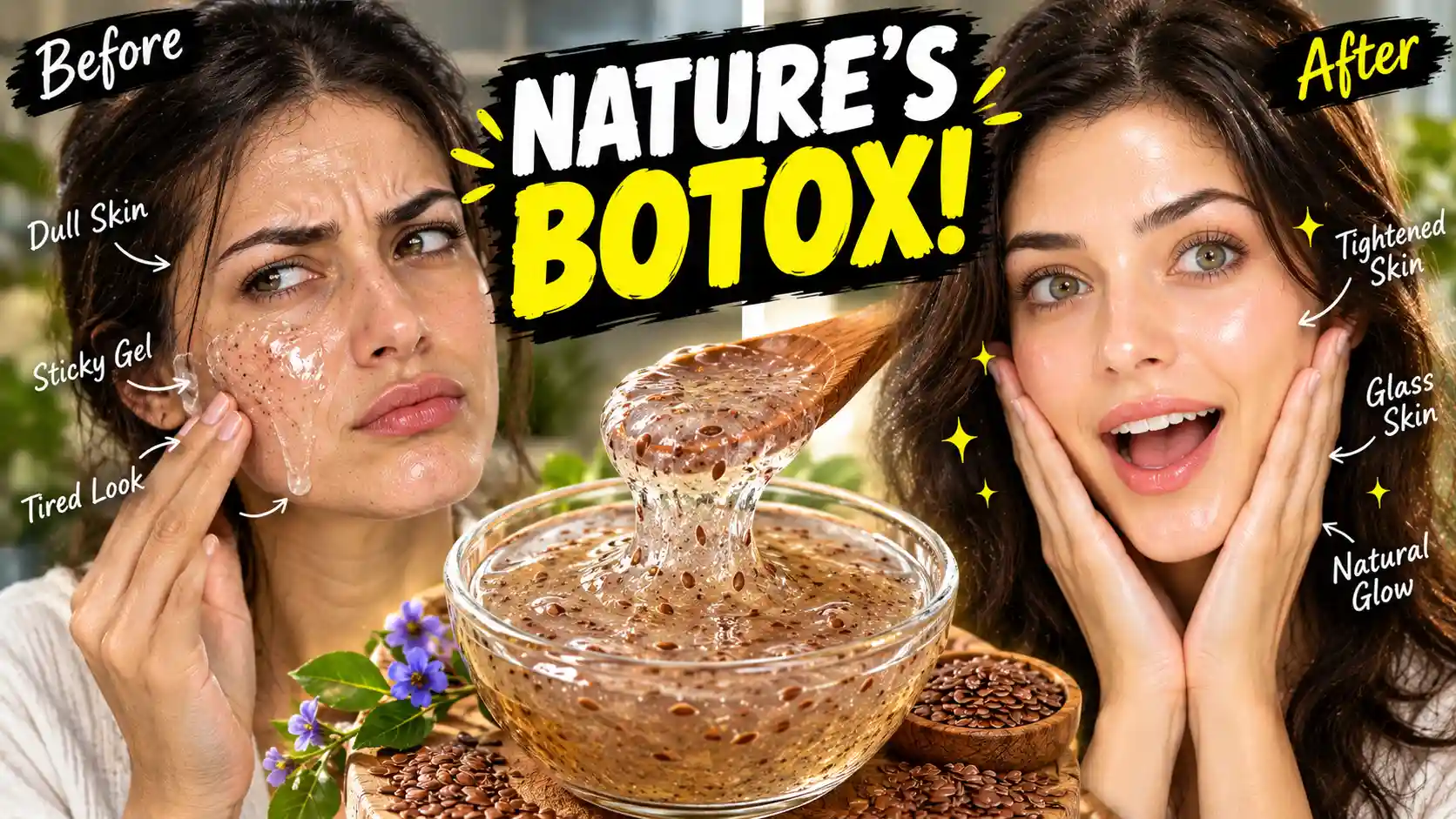
If you’ve spent any time on TikTok or Pinterest beauty boards lately, you’ve probably seen the videos: someone applies a thick, clear gel to their face, lets it dry, and rinses it off to reveal ridiculously smooth, glass-like skin. They call it “nature’s Botox.”
But does a simple DIY flaxseed face mask actually work, or is it just another passing internet fad?
The truth is, flaxseed gel is a fantastic, deeply hydrating skincare treatment that you can make in your kitchen for pennies. However, the viral claims often cross the line into unrealistic territory. While it won’t magically freeze your facial muscles like actual Botox, this simple mask can leave your skin feeling incredibly soft, plump, and temporarily tightened.
If you love experimenting with natural kitchen beauty hacks, this is one recipe you absolutely need to try. Here is everything you need to know about the viral flaxseed face mask, what it realistically does, and the exact step-by-step recipe to make it at home.
Table of Contents
1. What Is the Viral Flaxseed “Botox” Face Mask?
Over the past year, the DIY flaxseed gel mask exploded across social media. Beauty enthusiasts began boiling whole flaxseeds in water to extract a thick, gooey gel, applying it to their faces, and claiming it erased their fine lines overnight.
The nickname “Botox mask” comes from the physical sensation the mask creates as it dries. When the flaxseed gel evaporates on your skin, it tightens and forms a stiff film. This temporary pulling sensation feels exactly like your skin is being lifted and frozen in place, leading to the widespread (but misleading) comparison to injectable neurotoxins.
2. Can a DIY Flaxseed Mask Really Give You “Glass Skin”?
Yes, but it helps to understand how it works. “Glass skin” is a K-beauty term used to describe a complexion so intensely hydrated and smooth that it looks almost translucent and reflective.
Flaxseeds are packed with mucilage, a gel-like substance that acts as a powerful natural humectant. When you apply this gel to your face, it draws moisture into the top layers of your skin. Intense hydration plumps up the skin cells, which naturally smooths out the surface and makes fine lines look less noticeable.
However, you should be wary of viral before-and-after photos. Many creators use strategic lighting, angles, and sometimes even beauty filters to exaggerate their results. A DIY flaxseed face mask will give you a beautiful, hydrated glow, but it won’t change your fundamental skin structure overnight. For a complete glass skin routine, many people love pairing this mask with the best DIY rice water toner to lock in that extra layer of hydration.
3. Why Flaxseed Gel Feels Like a “Natural Skin Tightener”
When you apply the cooled flaxseed gel to your skin, it starts out wet and slippery. As the water content evaporates, the mucilage proteins and complex carbohydrates cross-link to form a thin, invisible film across your face.
This film literally contracts as it dries. The tightening sensation is entirely mechanical. It sits on the surface of your skin and pulls it taut. While this temporary film can make your face feel firm and lifted for a few hours after you wash it off, it is not permanently tightening loose skin or altering your collagen production.
Beyond the tightening effect, flaxseeds are rich in omega-3 fatty acids, specifically alpha-linolenic acid (ALA). While these fatty acids are most effective when eaten, applying them topically can help temporarily soothe and support the skin barrier.
4. How to Make the DIY Flaxseed Face Mask (Step-by-Step)
Making your own flaxseed gel is incredibly simple, but getting the water-to-seed ratio right is the secret to a perfect, thick texture.

Ingredients You’ll Need
- 1/4 cup whole flaxseeds: Do not use ground flaxseed; it will turn into a gritty, impossible-to-strain mush.
- 2 cups of filtered water: Filtered or distilled water is best to avoid mineral buildup from tap water.
Keep it simple: Resist the urge to add essential oils, lemon juice, or other viral ingredients during the boiling process. Pure flaxseed gel is gentle and safe for most skin types.
Step 1: Boil the Flaxseeds
Place the water and whole flaxseeds into a small saucepan. Bring the mixture to a gentle boil over medium heat. Once it starts boiling, reduce the heat to low and let it simmer. Stir constantly to prevent the seeds from sticking to the bottom of the pot.
You’ll want to simmer the mixture for about 7 to 10 minutes. You will notice the water transforming into a thick, slippery consistency, very similar to raw egg whites.
Step 2: Strain the Gel
This is the most important step: You must strain the gel while it is still warm. If you wait for it to cool, the gel will become too thick to pass through a strainer.
Remove the pot from the heat. Place a fine-mesh strainer over a clean glass bowl or jar. Carefully pour the warm mixture through. Use the back of a spoon to press the gel through the mesh, leaving the seeds behind.
Step 3: Cool & Prep
Never apply warm or hot gel to your face. Place the jar in the refrigerator for about 2 hours to let it cool completely. As it chills, it will thicken up even more into a beautiful, luxurious gel texture.
(Note: Making this gel follows the exact same extraction process as brewing a DIY rosemary mint hair water—boil, strain, and cool!)
5. How to Apply the Mask Correctly for Best Results

- Cleanse First: Always start with a freshly washed face. Remove all makeup, sunscreen, and excess oil so the gel can actually reach your skin.
- Apply a Thick Layer: Using clean fingers or a clean makeup brush, apply a generous, even layer of the chilled flaxseed gel all over your face and neck.
- Avoid the Eyes: Keep the gel away from your immediate eye area and eyelids. As the mask dries and tightens, pulling on the delicate skin around the eyes can cause irritation.
- Let It Dry: Leave the mask on for 15 to 20 minutes. Try not to talk, smile, or make excessive facial expressions while it dries, as the mask will crack and flake.
- Rinse Gently: Splash your face generously with lukewarm water to soften the gel. Do not peel or aggressively scrub the dried mask off. Gently massage it away with water and pat your skin dry.
6. Flaxseed Mask vs. Real Botox: What’s the Difference?
Let’s clear up the biggest misconception on the internet: Flaxseed gel is not Botox.
Injectable Botox (botulinum toxin) works by temporarily paralyzing the underlying facial muscles so they cannot contract, which prevents dynamic wrinkles from forming when you smile or frown.
A DIY flaxseed face mask works entirely on the surface. It provides topical hydration and a temporary tightening film. Once you wash the mask off, your muscles can still move, and your skin will return to its normal state within a few hours.
7. Realistic Results: What to Expect After 1 Use vs. 1 Month
After the First Use:
- Your skin will feel incredibly soft and hydrated.
- Your face will have a temporary, smooth “glass skin” glow.
- Fine dehydration lines may look temporarily plumped and less visible.

After Regular Use (1 Month):
- With consistent hydration, your overall skin barrier may feel healthier and less prone to dry patches.
- Your skin may maintain a better baseline level of moisture.
What It Cannot Do:
- It will not permanently erase deep wrinkles or lift sagging skin.
- It will not clear up severe acne or magically erase hyperpigmentation. (If dark spots are your main concern, you are much better off using a targeted DIY rice & oat brightening face mask).
8. Important Safety Tips & Who Should Avoid It
For most people, flaxseed gel is incredibly gentle and soothing. However, natural does not always mean allergy-free.
Always patch test first. Apply a small amount of the cooled gel to your jawline or the inside of your wrist and wait 24 hours. If you experience any itching, redness, or swelling, do not use it on your face.
You should avoid this mask if:
- You have a known allergy to flaxseeds.
- You have an active eczema or dermatitis flare-up.
- Your skin barrier is currently broken, sunburned, or severely irritated.
9. 5 Common Mistakes That Ruin the Flaxseed Mask
If you aren’t getting that viral glowing skin, you might be making one of these common DIY mistakes:
- Peeling it off: This is a wash-off mask, not a peel-off mask. Ripping dried gel off your face damages your skin barrier.
- Using ground flaxseed: This creates a muddy paste that gets stuck in your pores and is a nightmare to wash off. Stick to whole seeds.
- Leaving it on too long: Don’t leave it on for hours or sleep in it. Once it’s fully dry (about 20 minutes), it’s time to wash it off.
- Overcomplicating the recipe: Adding lemon juice, baking soda, or harsh essential oils will ruin the soothing nature of the gel.
- Using it over active irritation: If you’ve just used a strong chemical peel or a harsh retinol, give your skin a break before applying a tightening mask.
10. How to Store Leftover Flaxseed Gel Safely
Because this is a natural DIY recipe with zero chemical preservatives, it will go bad quickly.
Store your leftover strained gel in an airtight glass jar in the refrigerator. It will typically stay fresh for about 1 to 2 weeks. If the gel changes color, becomes cloudy, loses its thick consistency, or starts to smell sour, throw it away immediately.
11. Flaxseed Gel vs. Proven Skincare Ingredients
How does this kitchen hack stack up against traditional skincare?
- Flaxseed Face Mask: Best for a fun, affordable, temporary boost of deep surface hydration and a smoothing effect.
- Hyaluronic Acid: A lab-formulated humectant that penetrates deeper into the skin layers for sustained, all-day plumping.
- Retinoids: The actual gold standard for anti-aging. Retinol speeds up cell turnover and stimulates real collagen production over months of use.
- Vitamin C: A proven antioxidant that actually brightens dull skin and protects against environmental damage.
12. Don’t Forget Sunscreen After Your DIY Treatment
No matter how many natural masks you do, nothing ages your skin faster than unprotected sun exposure.
A DIY flaxseed face mask does not protect your skin from UV damage. If you are doing this mask in the morning, you must follow up with your regular moisturizer and a broad-spectrum SPF 30+ sunscreen.
13. Frequently Asked Questions (FAQ)
Can I use the flaxseed mask every day?
While it is gentle, using a tightening mask every single day isn’t necessary and could eventually irritate your skin from the constant drying and washing process. Using it 2 to 3 times a week is plenty for a hydration boost.
Can I put this gel in my hair?
Absolutely! Flaxseed gel is incredibly popular in the natural hair community as a moisturizing, non-crunchy styling gel for curls. In fact, alternating flaxseed gel for styling and a clove water hair spray for treatments is a fantastic natural hair routine. You can also explore rosemary water vs. rice water to complete your DIY hair care arsenal.
Does flaxseed gel help with acne?
It won’t cure acne, but because it is non-comedogenic and highly anti-inflammatory, it can help soothe the redness and irritation associated with active breakouts.
Is this better than aloe vera?
They serve different purposes. Aloe vera is highly soothing and cooling, while flaxseed leaves a more distinct plumping and tightening film. If you love DIY beauty, you might also want to check out how to use aloe vera for hair growth.
14. Final Thoughts: Is the Viral Flaxseed Mask Worth It?
If you go into it with realistic expectations, the viral DIY flaxseed face mask is absolutely worth trying. It will not replace clinical Botox, but it is one of the cheapest, easiest, and most effective ways to give your skin a massive drink of hydration and a beautiful, temporary “glass skin” finish.
Grab a bag of whole flaxseeds, spend 10 minutes at the stove, and enjoy that tight, glowing feeling for yourself!
1 thought on “How to Make the Viral DIY Flaxseed “Botox” Face Mask for Glowing Skin”