The Shift from Synthetic Serums to Botanical Scalp Care
If you have spent any time navigating the endless aisles of hair care products lately, you already know the drill: synthetic serums loaded with drying alcohols, silicones that offer superficial shine while coating the scalp, and clinical formulations that come with long lists of warning labels.
For years, mainstream hair care treated the scalp as an afterthought, focusing only on smoothing the strand. But real, lasting hair density doesn’t start at the ends—it begins beneath the surface, inside the follicle.
That realization is driving a quiet, powerful shift. More of us are clearing off our bathroom counters, stepping away from complex chemical cocktails, and returning to intentional, botanical scalp care. We aren’t looking for synthetic shortcuts; we want pure, plant-powered ingredients that respect the scalp’s delicate microbiome while actively encouraging new growth.
And at the very center of this botanical revival sits one humble Mediterranean herb: Rosemary (Rosmarinus officinalis).
Table of Contents
Why Rosemary Rivals Clinical Hair Density Treatments
While social media has recently turned rosemary oil into a viral phenomenon, its use as a restorative tonic spans centuries of traditional herbalism. What makes it genuinely remarkable, however, is that modern dermatological science now validates what ancient herbalists knew intuitively.
Rosemary essential oil contains high concentrations of carnosic acid—a potent, bio-active phenolic diterpene. When properly diluted and massaged into the scalp, carnosic acid actively repairs damaged tissue and calms local micro-inflammation.
More importantly, it stimulates microcapillary circulation. By gently dilating the microscopic blood vessels surrounding sluggish follicles, it delivers a fresh rush of oxygen and cellular nutrients directly to the hair bulb, effectively awakening dormant growth phases.
In fact, peer-reviewed clinical studies have revealed that the stimulating properties of rosemary oil can rival conventional synthetic treatments like 2% minoxidil in promoting hair count over time—all without the harsh scalp irritation, chemical residue, or sudden rebound shedding associated with pharmaceutical alternatives.
Making your own custom rosemary hair elixir isn’t just about saving money; it is about knowing every single ingredient that touches your skin, choosing pure unrefined carrier oils, and transforming a routine chore into a quiet, grounding self-care ritual.
The Science: Why Rosemary Oil Actually Works for Scalp Density
While viral beauty trends come and go, rosemary oil has maintained its status because its benefits are anchored in clinical dermatology. To understand why it works so effectively, it helps to understand what actually causes hair thinning in the first place.
Most gradual hair loss and reduced density happen when hair follicles become miniaturized. When microscopic blood capillaries leading to the hair bulb constrict, the follicle is deprived of essential micronutrients and oxygen. Over time, each growth cycle produces a finer, weaker strand until the follicle falls completely dormant.
Rosemary essential oil interrupts this cycle through targeted biological mechanisms:
- Microcapillary Vasodilation: Carnosic acid and rosmarinic acid work synergistically to dilate the microscopic vascular network feeding the scalp. Massaging diluted rosemary into the roots mechanically and chemically boosts local blood flow, replenishing starving hair bulbs with vital nutrients.
- Scalp Microbiome Balancing: Rosemary possesses natural antimicrobial and antifungal properties. By neutralizing excess sebum and controlling microbial overgrowth (such as Malassezia, the yeast responsible for stubborn dandruff and scalp inflammation), it creates a calm, balanced foundation where follicles can thrive.
- Cellular Turnover & Barrier Protection: Chronic micro-inflammation around the root is a silent culprit in premature shedding. Rosemary’s potent antioxidant profile protects delicate follicular tissue from oxidative stress caused by hard water, pollution, and product buildup.
The 2015 Comparative Study: Rosemary vs. 2% Minoxidil
The most compelling proof of rosemary’s efficacy came from a landmark 2015 randomized clinical trial published in Skinmed. Researchers pitted rosemary essential oil directly against 2% minoxidil—the conventional active ingredient used in over-the-counter clinical hair regrowth foams.
The trial tracked individuals experiencing androgenetic alopecia over a six-month window:
- At three months, neither group showed substantial shifts in density, illustrating that genuine follicular recovery demands consistent time and patience.
- By the six-month mark, both the rosemary group and the minoxidil group experienced a statistically significant, equal increase in total hair count.
- Crucially, the group using rosemary oil reported significantly less scalp itching, dryness, and allergic irritation compared to the group applying synthetic minoxidil.
This clinical trial verified what botanical practitioners had observed for generations: when applied consistently over a 3- to 6-month period, properly prepared rosemary oil provides density-building stimulation comparable to conventional treatments—without chemical flaking or harsh rebound shedding.
The Cardinal Rule: Why You Never Apply Pure Rosemary Essential Oil Direct to Scalp
With the excitement surrounding botanical hair growth, there is a common, dangerous temptation: assuming that more concentrated equals faster results. Some apply pure, undiluted rosemary essential oil straight from the tiny amber dropper onto their bare scalp.
Doing this will not speed up your hair growth—in fact, it is the fastest way to trigger the exact opposite outcome.
Pure essential oils are not simply scented plant oils; they are volatile, highly concentrated phytochemical distillates. It takes several pounds of fresh rosemary sprigs to extract just a few milliliters of therapeutic-grade oil. When placed directly on human skin without a buffer, these potent compounds cause immediate cellular stress:
- Severe Contact Dermatitis: Direct exposure strips the natural lipid barrier of the scalp, sparking acute redness, burning sensations, intense peeling, and blistering.
- Follicular Shock & Paradoxical Shedding: A damaged, inflamed scalp cannot anchor hair roots securely. Instead of awakening dormant strands, harsh chemical irritation shocks follicles into the telogen (shedding) phase, leading to sudden hair fall.
- Rapid Evaporation: Because essential oils are volatile liquids, applying them neat means much of the active carnosic acid evaporates into the air before it ever penetrates the skin layers.
Carrier Oils as Nutrient Delivery Vehicles
To harness the density-boosting power of rosemary safely, you need a lipid-rich foundation: a carrier oil.
Carrier oils do far more than merely dilute the potency of the essential oil to safe, biologically compatible levels. They serve as mechanical delivery vehicles. The fatty acid chains in carrier oils bind to the volatile rosemary compounds, preventing rapid evaporation and actively transporting those active phytonutrients deep down into the follicular canal.
Simultaneously, a nourishing carrier oil forms a breathable lipid seal over the scalp, replenishing moisture, soothing the skin barrier, and ensuring the active compounds work undisturbed for hours.
Choosing the right carrier oil for your specific scalp and strand texture is just as vital as the rosemary itself.
Choosing Your Base: The Best Carrier Oils for Your Hair Type
A botanical hair oil blend is only as effective as its carrier base. Because different scalp types and hair densities react uniquely to plant lipids, selecting the appropriate carrier oil ensures your hair absorbs maximum nutrition without feeling weighed down or greasy.
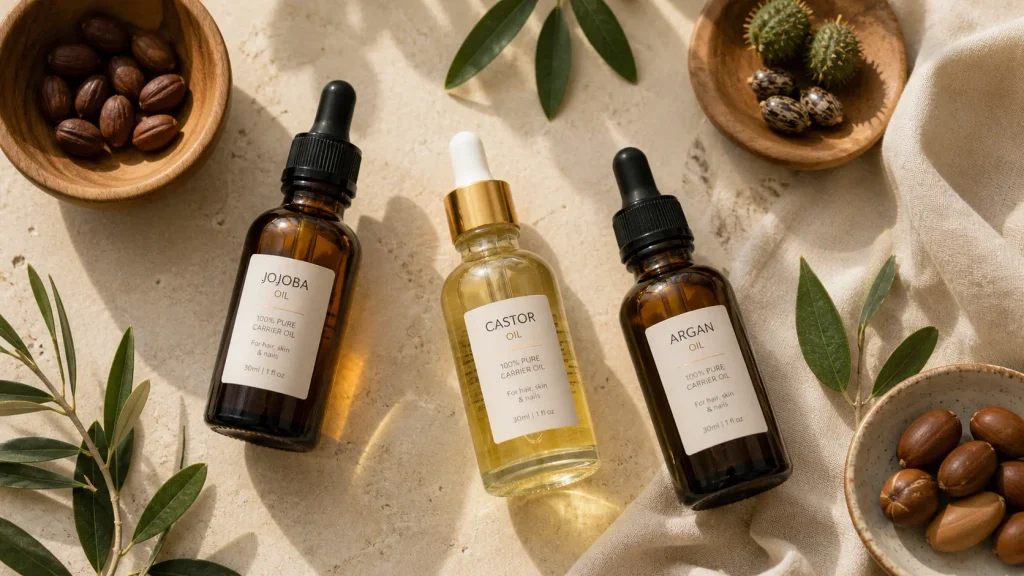
Here is how to match the right cold-pressed carrier oil to your hair texture and scalp needs:
1. Jojoba Oil: Best for Oily, Sensitive, or Balanced Scalps
Technically a liquid plant wax rather than a true oil, jojoba oil mirrors human sebum more closely than any other botanical oil in nature.
- Why It Works: Because its molecular weight mimics natural scalp oils, jojoba absorbs rapidly without leaving a tacky film. It signals the sebaceous glands to regulate sebum production, making it ideal if you struggle with greasy roots by day two.
- Key Benefits: Dissolves hardened sebum plugs around clogged follicles, calms scalp itchiness, and delivers lightweight moisture that rinses out cleanly with gentle shampoo.
2. Cold-Pressed Castor Oil: Best for High Density, Coarse, or Brittle Hair
Thick, viscous, and intensely rich, castor oil is a powerhouse ingredient renowned in traditional hair rituals for reinforcing strand resilience and boosting visible thickness.
- Why It Works: Over 85% of castor oil consists of ricinoleic acid—a rare omega-9 monounsaturated fatty acid known for deep emollience and microcirculatory stimulation.
- Key Benefits: Coats dry, fragile hair shafts, seals the cuticle layer, and locks moisture deep within brittle strands to prevent breakage.
- Pro Blending Tip: Castor oil is too thick to use on its own. For the best application experience, blend 1 part castor oil with 2 parts of a lighter carrier (like jojoba or sweet almond) so it glides smoothly across the scalp.
3. Argan Oil & Sweet Almond Oil: Best for Fine Strands & Buildup-Prone Hair
If your hair is easily weighed down by heavy treatments or tends to look limp after oiling, lighter botanical oils provide the necessary glide and protection without flattening your roots.
- Argan Oil: Rich in vitamin E, linoleic acid, and ferulic acid, pure cold-pressed argan oil seals moisture into the hair shaft, softens ends, and adds a natural gloss without clogging pores.
- Sweet Almond Oil: Packed with magnesium, zinc, and lightweight fatty acids, sweet almond oil effortlessly slips through roots, softens dry scalp flakes, and washes out with zero residue.
Summary: Carrier Oil Quick Selector
- Oily Scalp / Clogged Follicles: Pure Jojoba Oil
- Dry, Coarse, or Thinning Strands: Castor Oil blended with Jojoba Oil
- Fine Hair / Low Porosity: Pure Sweet Almond Oil or Argan Oil
The Exact Dilution Math: Safe Formulation Ratios
Formulating a botanical scalp oil at home requires scientific precision. Essential oils are measured in drops, while carrier oils are measured in fluid ounces (or milliliters). To keep your blend both safe for sensitive scalp tissue and biologically active, you need to follow precise dilution percentages.
Standard aromatherapy guidelines calculate approximately 600 drops of essential oil per 1 fluid ounce (30 ml) of liquid. Using this baseline, here is how the percentages break down for scalp treatments:
The 1% Dilution Rule (Best for Sensitive Scalps & Beginners)
If you are brand new to rosemary oil, have a sensitive skin barrier, or have previously reacted to active botanical ingredients, start with a 1% dilution.
- The Ratio: 6 drops of rosemary essential oil per 1 fluid ounce (30 ml) of carrier oil.
- The Purpose: Delivers mild microcirculation stimulation while allowing your scalp microbiome to adapt comfortably without redness or tingling.
The 2% Dilution Rule (The Standard Density-Building Formula)
A 2% dilution is the gold standard used in clinical dermatological trials for targeting hair thinning and encouraging follicular activity over time.
- The Ratio: 12 drops of rosemary essential oil per 1 fluid ounce (30 ml) of carrier oil.
- The Purpose: Provides optimal bioavailability of carnosic acid to nourish follicles without compromising the scalp’s lipid barrier.
(Note: Never exceed a 3% dilution—roughly 18 drops per ounce—for regular leave-on scalp treatments, as higher concentrations increase the risk of sensitization).
Carrier Oil to Rosemary Oil Dilution Chart
Use this quick-reference measurement guide when preparing your amber dropper bottles:
| Bottle Size (Fluid Ounces) | Bottle Size (Milliliters) | 1% Dilution (Sensitive Scalp) | 2% Dilution (Standard Growth Blend) |
|---|---|---|---|
| 1 oz Bottle | ~30 ml | 6 drops | 12 drops |
| 2 oz Bottle (Recommended) | ~60 ml | 12 drops | 24 drops |
| 4 oz Bottle | ~120 ml | 24 drops | 48 drops |
For best results, prepare a 2 oz (60 ml) batch. This provides roughly 6 to 8 weeks of treatments, ensuring your botanical elixir remains fresh, potent, and unoxidized from the first drop to the last.
Tools & Supplies Checklist
Formulating clean botanical care at home is simple, but your choice of tools makes the difference between a potent, shelf-stable elixir and an oil that quickly degrades. Because pure plant extracts are sensitive to light, oxygen, and contamination, assemble these clean-crafted essentials before blending:
- Dark Amber Glass Dropper Bottle (2 oz / 60 ml): Clear plastic is porous and leaches chemicals over time when exposed to volatile essential oils. Amber or cobalt glass blocks harmful UV wavelengths, shielding delicate botanical compounds from photolytic breakdown and keeping your blend fresh for months. An integrated glass pipette dropper ensures mess-free, targeted scalp application.
- 100% Pure Organic Rosemary Essential Oil (Rosmarinus officinalis): Check the Latin botanical name on the label to verify authenticity. Look for 100% pure, steam-distilled essential oil free from synthetic fragrance additives, mineral oil, or alcohol fillers.
- Cold-Pressed, Unrefined Carrier Oil: Choose high-grade, unrefined jojoba, argan, sweet almond, or cold-pressed castor oil. Cold-pressing extracts the plant lipids without high friction heat or chemical solvents, preserving natural vitamin E, antioxidants, and essential fatty acids.
- Stainless Steel Mini Funnel: Pure essential oils can melt or degrade soft plastic funnels. A small food-grade stainless steel funnel makes pouring your carrier oils into the narrow mouth of your amber bottle smooth, spill-free, and sanitary.
- Rubbing Alcohol (70% Isopropyl): A quick wipe-down of your bottle, glass dropper, and work surface prevents unwanted moisture or airborne bacteria from entering your formulation.
Step-by-Step DIY Recipe: The 5-Minute Cold-Blend Method
This recipe uses a cold-blend technique to preserve the heat-sensitive polyphenols in unrefined carrier oils and protect the volatile carnosic acid in the rosemary extract.
This recipe yields a 2 oz (60 ml) batch formulated at a 2% standard growth dilution.
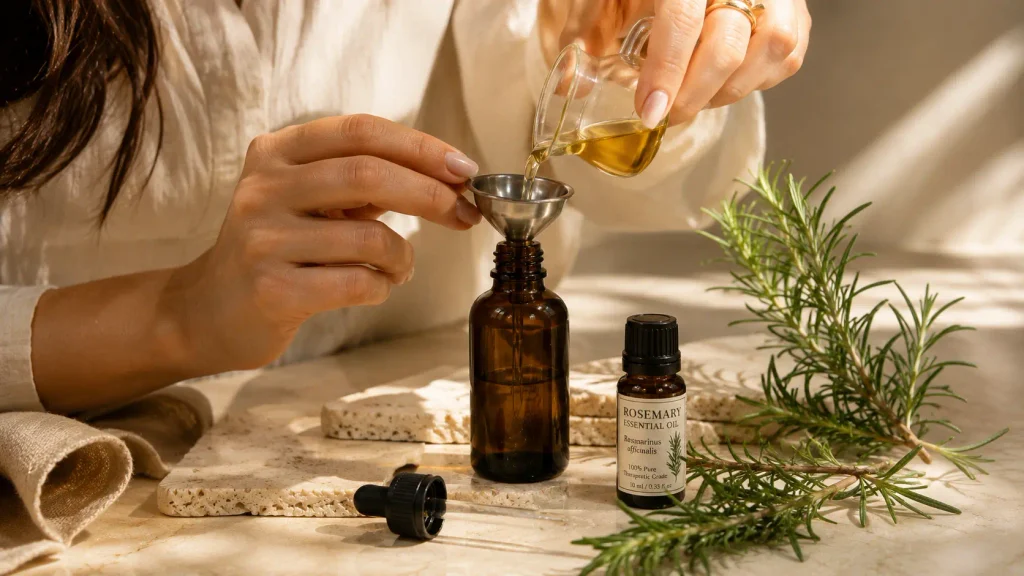
Step 1: Sanitize and Prep Your Workstation
Moisture is the primary cause of rancidity in homemade beauty preparations. Ensure every tool touching your oil is completely dry and sanitized.
- Wipe down your counter, stainless steel mini funnel, and glass dropper with a clean cotton pad lightly dampened with rubbing alcohol.
- Let everything air dry fully for two minutes. Never allow residual alcohol or water droplets inside your amber bottle.
Step 2: Measure and Pour Your Carrier Base
Insert your stainless steel mini funnel into the mouth of the 2 oz amber bottle. Pour in your chosen carrier oils, leaving roughly half an inch of headspace at the neck to accommodate the dropper insert.
- For Balanced to Oily Scalps: Pour 2 oz (60 ml) of pure cold-pressed jojoba oil directly into the bottle.
- For High Density / Dry Scalp Treatment: Pour 1.5 oz (~45 ml) of jojoba or sweet almond oil first, then top with 0.5 oz (~15 ml) of cold-pressed castor oil for added slip and richness.
Step 3: Add Precise Essential Oil Drops
Hold your bottle of pure rosemary essential oil (Rosmarinus officinalis) at a 45-degree angle directly over the open amber bottle.
- Slowly count out 24 drops for your standard 2% dilution (or 12 drops if formulating a 1% blend for reactive skin).
- Allow each drop to fall naturally without rushing; steady pacing ensures consistent droplet volume and formulation precision.
Step 4: The Roll-and-Rest Technique
Avoid shaking the bottle vigorously. Forcefully agitating botanical oils introduces microscopic air bubbles, speeding up oxidative rancidity and destabilizing the delicate fatty acid chains.
- Tightly twist the glass dropper lid onto the amber bottle.
- Place the bottle horizontally between the palms of your hands.
- Roll the bottle back and forth gently for 45 to 60 seconds. The natural warmth of your hands helps the carrier lipids bind to the essential oil molecules seamlessly.
- Let the freshly blended bottle rest in a cool, dark cabinet for 12 to 24 hours before your initial application so the botanical synergy fully stabilizes.
How to Apply: The Scalp Massage Routine for Optimal Absorption
Formulating the right botanical blend is only half the ritual. The physical technique you use to apply and distribute the oil directly dictates how effectively those active compounds reach the hair bulb. Mechanical scalp stimulation and chemical botanical action work together to encourage follicular microcirculation.
Here is the exact method to maximize absorption without creating unnecessary tangles or product buildup:
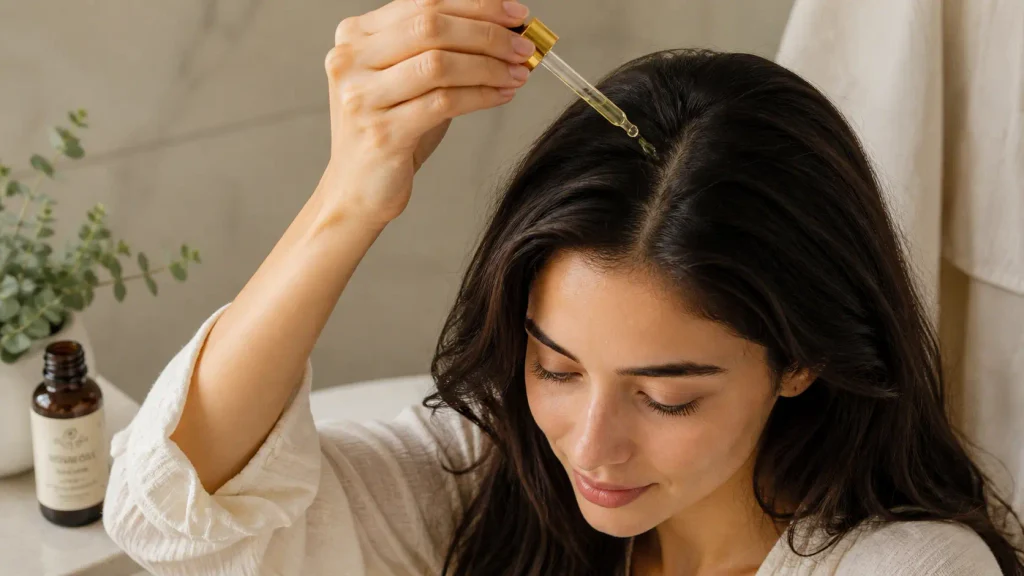
Step 1: Parting and Targeted Dropper Placement
Never pour oil haphazardly over the crown of your head. This coats the surface hair strands rather than reaching the skin, wasting product and making wash day unnecessarily difficult.
- Detangle First: Use a wide-tooth wooden comb to gently work out knots, starting from your ends and working up toward the roots.
- Create Clean Partings: Using the tip of a rattail comb or your fingers, part your hair down the center from your forehead to the nape of your neck.
- Target the Scalp: Place the glass pipette directly against exposed scalp skin. Release 2 to 3 small droplets along the parted line.
- Section Across: Create parallel partings roughly one inch apart across your entire scalp—paying close attention to areas where you want to support density, such as the temples, hairline, and crown. In total, 1 to 2 full droppers (about 15 to 20 drops total) is plenty for an entire treatment.
Step 2: The 5-Minute Circular Massage Technique
Massaging your scalp physically stretches human dermal papilla cells, kickstarting biological pathways associated with hair thickness.
- Fingertip Pressure (Pads Only): Place the soft pads of your fingertips firmly against your scalp. Never use your fingernails, as tiny scratches can cause micro-abrasions and inflammation. Move your fingertips in small, firm, circular motions, gently shifting the scalp skin over the underlying skull rather than sliding your fingers across the hair fibers.
- Bamboo Scalp Massager Alternative: If your hands fatigue easily, a natural bamboo bristle brush or a flexible silicone scalp tool works wonderfully. Press lightly and work in slow, small circular rotations, moving systematically from your hairline down to the base of your skull for 4 to 5 minutes.
Step 3: Duration—Why 30 to 60 Minutes Beats Overnight Soaking
A persistent myth in online hair communities is that leaving oil on your scalp overnight produces faster growth. In reality, leaving rich plant oils on your scalp for 8+ hours often causes more harm than good.
- The Risk of Overnight Oil: Extended exposure traps heat, ambient sweat, and shed skin cells against the scalp. This creates an ideal breeding ground for yeast (Malassezia), which can trigger stubborn flaking, folliculitis, and weakened root anchors.
- The Sweet Spot (30 to 60 Minutes): Clinical dermatological research demonstrates that plant lipids and volatile essential oils penetrate the stratum corneum and follicular canal within 30 to 45 minutes. Leaving the oil on for 1 to 2 hours maximum delivers complete cellular benefits without congesting your scalp’s delicate microbiome.
- Pro Ritual Tip: Wrap your hair in a warm, dry microfiber hair towel while resting. The gentle trapped warmth opens the pores, encouraging deeper, faster lipid penetration.
Frequency & Wash-Out Protocol
Consistency matters far more than intensity when it comes to botanical scalp treatments. Flooding your scalp with rich oils every day will rapidly overwhelm your follicles, leading to buildup and irritation. To see sustainable results, you need a balanced schedule combined with a thorough cleansing technique.
How Many Times per Week to Apply
For optimal follicular stimulation without throwing off your scalp’s natural sebum equilibrium:
- Standard Routine: Apply your rosemary blend 1 to 2 times per week. This cadence aligns naturally with most regular wash-day schedules and provides consistent microvascular stimulation without clogging the skin.
- Fine or Oily Hair Types: Stick strictly to once per week. Giving your scalp ample time to breathe prevents heavy carrier lipids from weighing down finer textures.
- Coarse, Thick, or Extremely Dry Hair: Up to 2 times per week offers excellent barrier hydration alongside density support.
The Double-Cleansing Technique: Removing Oil Without Stripping Moisture
Washing heavy botanical oils out of your hair with an aggressive, sulfate-packed clarifying shampoo defeats the purpose of the ritual, leaving your scalp tight and your strands parched. Instead, use the conditioner-first emulsion method to rinse away lipids effortlessly:
- Step 1: The Dry Conditioner Emulsion (The Pro Trick): Before turning on the shower, apply a generous palmful of an affordable, silicone-free conditioner directly onto your dry, oiled roots. Water naturally repels oil, but the gentle surfactants and fatty alcohols in conditioner bind directly to the carrier lipids, breaking them down instantly.
- Step 2: Massage and Add Warm Water: Work the conditioner through your roots for 60 seconds with your fingers. Step under the shower stream and add just enough warm water to lather the mixture into a creamy emulsion, then rinse it clean. The majority of the oil will wash down the drain immediately.
- Step 3: Gentle Scalp Shampoo: Follow with your regular sulfate-free shampoo. Lather it thoroughly between your palms, press it into your roots, and massage in circular motions to clear any remaining botanical traces. Rinse with lukewarm water.
- Step 4: Seal the Mid-Lengths and Ends: Apply your regular hydrating conditioner or hair mask strictly from mid-shaft to ends, keeping it away from your freshly cleansed scalp. Finish with a quick cool-water rinse to seal down the cuticle for mirror-like shine.
Storage, Shelf Life & Safety Measures
Because this formulation is 100% natural and free from synthetic preservatives, parabens, and stabilizing chemicals, how you store your blend directly influences its shelf life and biological potency. Treat your botanical oil like fine skincare to preserve its active carnosic acid profile.
Why Amber or Cobalt Glass is Essential
Never store pure botanical oils in clear glass or commercial clear plastic containers.
- Photolytic Degradation: Direct exposure to ambient ultraviolet (UV) light triggers photo-oxidation in unsaturated plant fatty acids. Light breaks down the molecular structure of both the carrier oil and the volatile essential oil, turning active compounds inert.
- Amber & Cobalt Filtering: Dark amber glass absorbs harmful ultraviolet and blue-light radiation, creating a protective barrier that keeps delicate phytonutrients bio-active.
- Storage Location: Store your amber dropper bottle in a cool, dark, and dry environment—such as a closed medicine cabinet, vanity drawer, or linen closet. Avoid leaving it on humid shower ledges or sunny windowsills, where heat and steam fluctuate constantly.
Shelf Life and Detecting Rancidity
When formulated with pure, fresh ingredients, your cold-blended rosemary hair oil will remain potent for 6 to 12 months. The exact shelf life depends entirely on the stability of your chosen carrier base:
- Jojoba Oil Base: Highly stable liquid wax with a shelf life extending up to 2 years.
- Castor Oil Base: Thick, durable monounsaturated lipid that stays fresh for up to 12 to 18 months.
- Sweet Almond & Argan Oils: Richer in polyunsaturated fatty acids; typically remain fresh for 6 to 9 months.
Signs Your Oil Has Turned Rancid:
Natural carrier oils do not grow mold unless contaminated with water, but they will oxidize over time. Discard your bottle immediately if:
- The scent shifts from fresh, herbal, and piney to sour, stale, or resembling old crayons.
- The texture feels uncharacteristically thick, sticky, or gummy around the dropper neck.
- The oil clouds heavily or discolors even when stored at comfortable room temperatures.
The Mandatory 24-Hour Patch Test Procedure
Botanical ingredients are biologically active, and individual sensitivities can occur. Before applying any essential oil blend to your entire scalp, always perform a simple patch test:
- Step 1: Cleanse the Test Area: Wash and dry a small patch of skin on your inner forearm or behind your earlobe.
- Step 2: Apply a Single Drop: Dispense 1 single drop of your diluted rosemary oil onto the area and rub it in gently with clean fingertips.
- Step 3: Monitor for 24 Hours: Keep the area dry and undisturbed. Check periodically throughout the day for signs of reactive sensitivity.
- The Verdict: If you experience no redness, stinging, warmth, itching, or hives after a full 24 hours, the blend is safe for your scalp routine. If slight irritation occurs, dilute the blend with additional carrier oil to reduce the concentration to 0.5%–1%, or discontinue use.
(Safety Note: Pregnant or nursing individuals and those diagnosed with epilepsy should consult their healthcare provider before using rosemary essential oil, as active terpenes can influence circulatory rhythms).
Frequently Asked Questions (FAQ)
Can I leave rosemary oil in my hair overnight?
It is best not to leave rich carrier oils on your scalp overnight. While it might sound like an intensive treatment, resting with heavy lipids on your roots for 7 to 8 hours traps sweat, ambient heat, and shedding skin cells. This environment encourages microbial overgrowth, specifically Malassezia yeast, which can cause flaking, clogged follicles, and inflammation. A targeted session of 30 to 60 minutes gives the active carnosic acid ample time to absorb into the dermal layer without congesting your skin.
How many weeks before noticing new baby hairs or reduced shedding?
Botanical hair restoration is a gradual process tied to natural hair growth cycles. Most people notice a visible reduction in daily shower shedding around the 6 to 8-week mark of consistent weekly application. Noticeable new growth—fine baby hairs along the hairline and temples, followed by improved overall density—typically appears between 12 to 24 weeks (3 to 6 months). Patience and weekly consistency are key.
Can I use fresh rosemary sprigs instead of essential oil?
You can infuse carrier oils with fresh herbs, but it introduces a major safety risk: water content. Fresh rosemary sprigs contain moisture, which creates an ideal breeding ground for harmful bacterial growth and mold in oil infusions within days. If you prefer using herbal leaves rather than steam-distilled essential oil, use 100% dried organic rosemary leaves, gently warm them in your carrier oil using a double-boiler method, and strain the mixture through an ultra-fine cheesecloth to remove all plant matter before bottling.
Taking care of your scalp is an ongoing practice, not an overnight fix. By taking a few minutes each week to mix pure, unrefined botanical ingredients and massage your roots, you create a calm, grounded ritual that actively supports fuller, stronger hair from the inside out.
2 thoughts on “How to Make Rosemary Hair Oil for Hair Growth: The Exact Dilution Ratio & Recipe”